 Doha New
John Healey’s “risky” Budget has exposed Britain to further economic shocks and failed to tackle the “worst decade for growth” for household incomes on record, an influential think tank has warned. The chancellor was told that the reduced financial headroom he has left himself with as a result of his first Budget could leave the country “more exposed to future bad news”, as government departments also face real-terms value cuts to their spending. In an exasperated tone, the Institute for Fiscal Studies (IFS) hit out at “temporary cost of living measures”, which it said were no substitute for “a strong economy”, in a broadside against the approach taken by Andy Burnham since he became prime minister by introducing a series of small measures on minor reductions to energy bills and capping the price of bus tickets at £2.
In its analysis of Mr Healey’s Budget, the IFS said there are “risks” to his approach, which also come amid dismal growth for household incomes. IFS director Helen Miller said it was “reasonable” to allow headroom to fall to absorb higher borrowing costs, but added: “Higher borrowing will need to be paid for. A lower buffer leaves the Chancellor more exposed to future bad news.
There are risks to this approach.” The government’s fiscal headroom has been slashed by over £8 billion to £15 billion in the 2029/30 fiscal year, down from the Office of Budget Responsibility’s (OBR) March estimate of £24 billion under Rachel Reeves. (House of Commons) Ms Miller said the chancellor will need to do more, amid “depressing” growth, and said: “It’s depressing. No amount of temporary cost of living packages will fix that. We need a stronger economy.” The headline cost of living measure unveiled by the chancellor on Wednesday was the £100 payment for around 20 million homes to help with the cost of energy bills.
But the IFS is one of several think tanks who have criticised Mr Healey’s first Budget. The Resolution Foundation, set up to help people on lower and middle incomes, says the Budget will do little to address “the sharp challenges facing Britain”. The rebuff for Mr Healey's package of measures is particularly embarrassing because until two years ago the think tank was headed by pensions minister Torsten Bell.
The Confederation of British Industry (CBI) also said the chancellor had delivered a “nothing” Budget which did not “meet the scale of that ambition” set out by Mr Burnham. Meanwhile, OBR said the UK’s “economic and fiscal position remains very challenging” after almost two decades of shocks and stagnation, pushing up the national debt. Professor David Miles of its Budget Responsibility Committee (BRC) warned it marked a “pretty grim picture”.
The IFS also warned Mr Healey’s decision to leave government departmental statement largely unchanged means “means that the real-terms value of budgets has been cut” in the face of higher inflation “If you go back to just before Covid and take that as your base, where we are right now which is what some seven years later, is virtually no growth in per person real household disposable income,” he said. “That’s pretty unusual in the history of the UK.” He added: “It’s been a dismal period in British economic history.” Ms Miller also criticised Mr Healey’s “small, unhelpful fiddling with the tax system”, leaving it in a “mess” and calling his new Founders’ Relief “bonkers”. “It is far more complex than it should be,” she said.
“And that is because, Budget after Budget, chancellors make seemingly small tweaks that lack principle and don’t systematically move us to a better place. This approach gives us more complexity and more instability. Both have real economic costs.” The IFS also warned Mr Healey’s decision to leave government departmental statement largely unchanged means “means that the real-terms value of budgets has been cut” in the face of higher inflation.
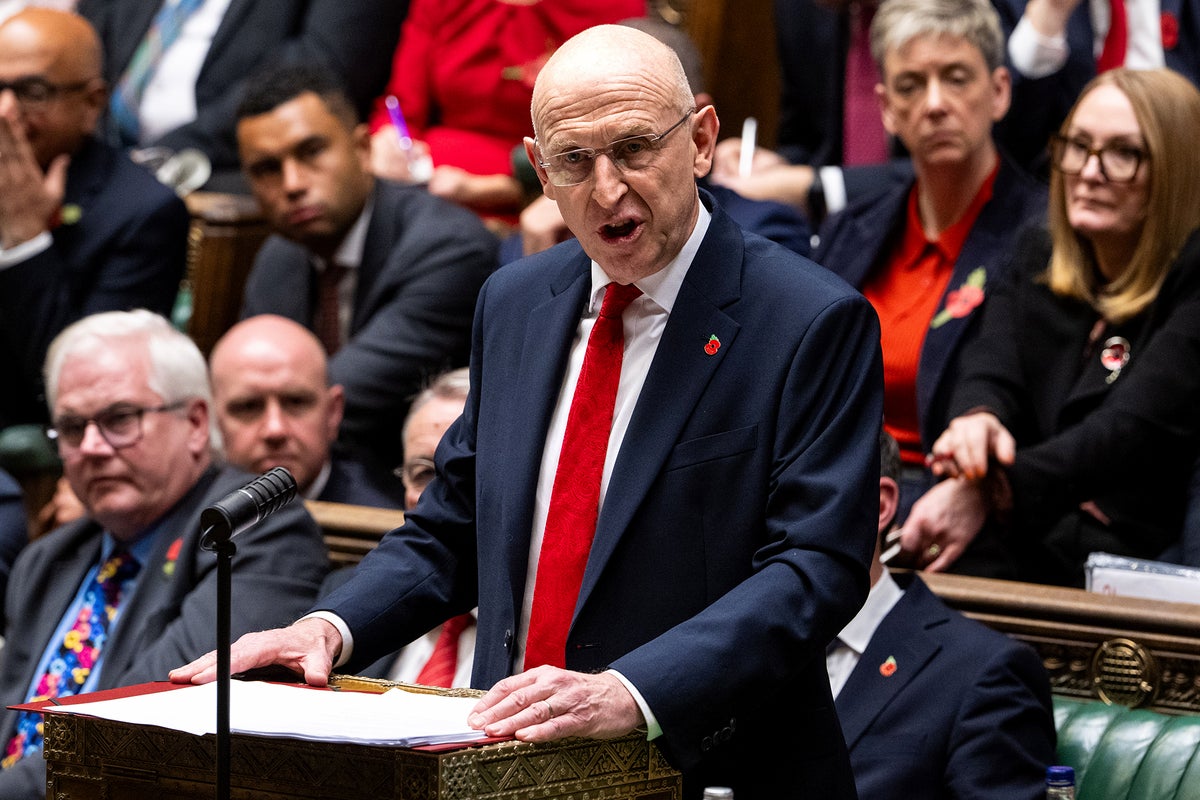
In Wednesday’s speech in the Commons, Mr Healey committed to spending 3 per cent of economic output on defence by 2030, and to “fully funding” the £4.7 billion black hole in the defence investment plan (Dip) left by Sir Keir Starmer. Departments across government will be asked to reduce their capital budgets by 1 per cent each between 2027-28 and 2029-30 to raise some £3 billion. The Dip shortfall will be funded “through reprioritisation of capital budgets”, according to the Budget document (Reuters) The remaining £1.7 billion shortfall will be made up from an “unallocated contingency in the Treasury’s capital reserve”, the Budget said.
“It effectively implies that some public services will see real-terms cuts in next year’s Spending Review,” Ms Miller said. “Avoiding the cuts implied by both higher inflation and tight envelopes could plausibly require a top-up of £17 billion in 2030-21. That’s true even before thinking about the £11 billion needed to fund defence plans.” Bee Boileau, a research economist at the Institute for Fiscal Studies, said public service spending will be “the Achilles’ hell” of Mr Healey’s plan for “fiscal consolidation”.
She said the plans imply “really very tough times ahead for public services” as a result of inflation, slow spending growth and commitments to defence spending. “The government could deliver these, but these will imply setting out lots of real terms cuts to departments over the coming years, and there’ll be huge pressure to put in some top-ups,” she said. “Next year’s spending review will be the real crunch point for this government.” Ms Miller also said Mr Healey’s decision to fund a £4.7 billion black hole in defence spending in part by drawing down on reserves weakens the government’s ability to weather future global shocks.
The Budget has been dismissed as “scattergun” by an economic think tank formerly run by one of the chancellor Mr Healey's own Treasury ministers (House of Commons) She said she was still “no wiser” as to how Mr Healey planned to hit his target of spending 3 per cent of GDP on defence by 2030. “I am grumpy about how the Chancellor decided to fund the relatively small hole in the defence investment plan – that’s the plan that gets defence spending to 2.7 per cent of GDP next year and keeps it there until 2029-30,” she said. “Much of it came from further cuts to the capital budgets of other Government departments.
Fine. Priorities change but the rest came from raiding reserves in future years. “This is worth drawing out: John Healey has now spent 25 per cent of the capital reserve set aside for the next three years.
He’s also spent 40 per cent of the day-to-day reserve. “This is categorically not what the reserves are for. Drawing down reserves is another way the government has reduced its buffer against future shocks.” The chancellor’s Budget has also faced criticism for not dealing with the ballooning cost of welfare, including from Tory leader Kemi Badenoch, who said the country is “drowning in an out-of-control welfare system”.
Delivering his Budget on Wednesday, Mr Healey delayed major changes to welfare until 2027, arguing the government would wait for the outcome of Alan Milburn’s review into the youth unemployment crisis, which is due to be published next month. The OBR forecast that the total cost of health-related benefits, which includes sickness benefits and personal independence payments (Pip), will reach £105bn by the 2028-29 financial year.
Source: The Independent