 Doha New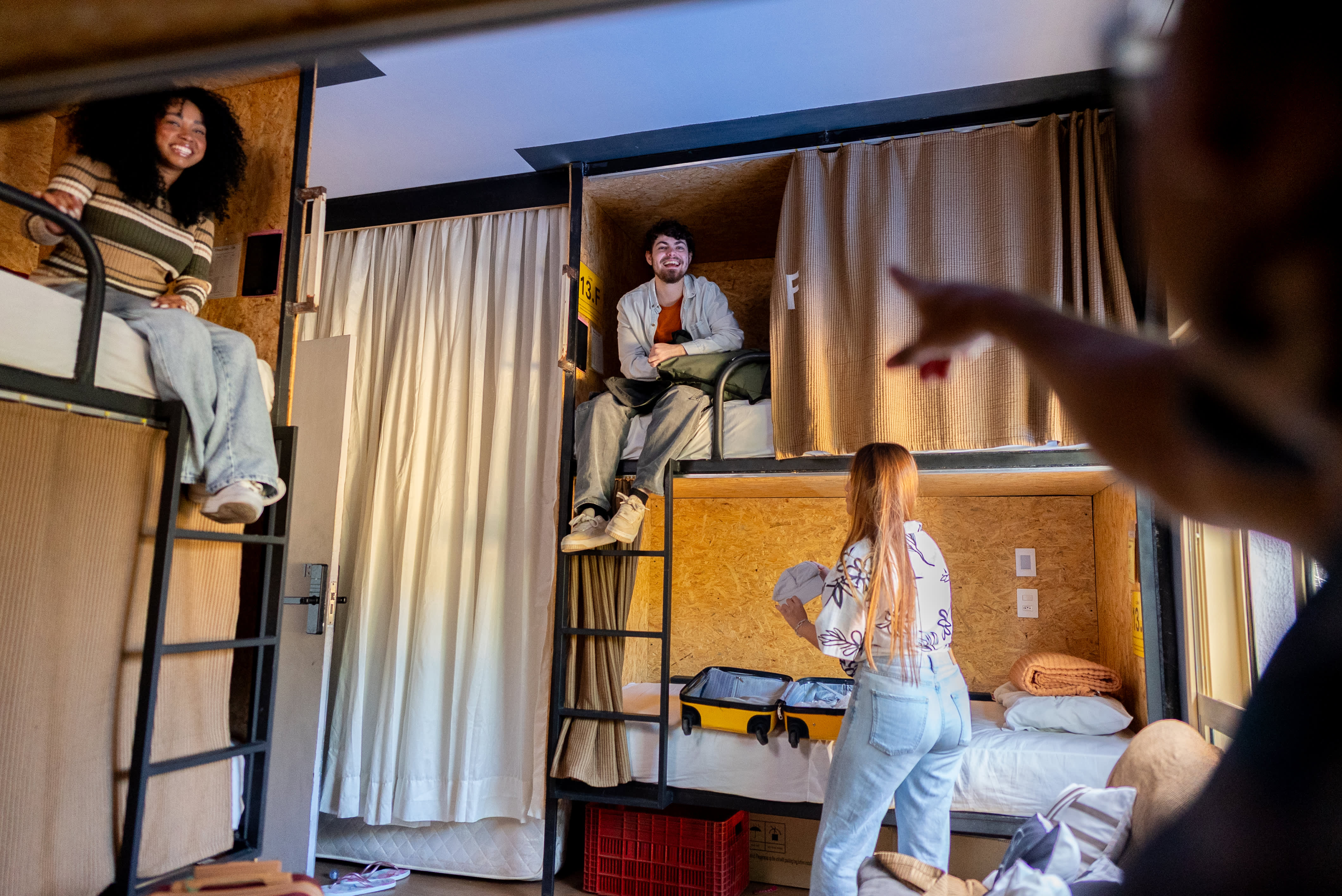
Fg Trade | E+ | Getty Images On a recent weekend, Jami Hagerman embarked on the budget-vacation equivalent of a blind date. The hairstylist and her husband spent about $400 on Groupon 'mystery vacation' vouchers that promised accommodations and airfare for the pair—no say in the destination. The Oklahoma City residents were sent to New Orleans, where they visited museums, took walking tours, and ate the city's famous beignet desert.
"I feel like the value was great for the trip," said Hagerman, 29. "It was fun." Hagerman isn't the only one balancing an inclination to see the world with the pinch of higher prices. Travel costs are surging amid the U.S. war with Iran, and many companies in the industry are shifting focus toward premium offerings to fetch higher prices and margins.
Despite this, data shows budget-conscious travelers aren’t giving up. Lower-income clients, or those with annual earnings under $36,675, spent more monthly on travel earlier this year than at any point since at least 2019, with spending in July rising 7% from the same month a year ago, according to PNC card data. Groupon expanded its mystery vacation offerings from North America to a full portfolio, recording around 5,500 orders in the second quarter of 2026—a five-fold increase from the first quarter of 2025.
The flagship package, priced between $199 and $299 per person, offers a 50% discount. While some buyers end up in far-flung destinations like Singapore or Paris, most are sent to domestic locations such as Las Vegas, Atlanta, or Orlando. Participants are told their destinations within a few days of filling out paperwork.
"Orlando probably wouldn’t have been in my top 10 pick of places," said Tammy Wales, a Georgia-based travel agent whose mystery vacation led her to Orlando. "But, as long as I'm gone, I don't really care. The biggest thing was being able to take a trip and have the element of surprise." Gas prices are nearing record highs on Labor Day, having jumped roughly 30% annually, according to AAA.
Airline fares surged more than 25% year over year as of July, per the Bureau of Labor Statistics. Meanwhile, the luxury segment of the travel industry has grown, with airlines like Delta and Southwest expanding first-class cabins and lounges. However, the outlook for value travel remains positive.
Industry data provider OAG found that low-cost airlines have gained market share in 2025 compared to pre-pandemic levels, though this could be impacted by Spirit Airlines’ recent shutdown. Despite recent luxury hotel production growth, most new rooms remain in affordable tiers, according to Jay Morrow, head of hospitality advisory at Walker & Dunlop. Groupon’s mystery package isn’t the only value-centric travel product gaining attention.
Hostelworld reported a 10% increase in U.S. and Canadian consumer transactions in the first half of 2026 compared to the same period a year prior. Booking Holdings’ average daily rates for its lower-end segment remained flat, marking an improvement after a streak of negative readings. Carnival Corp. also saw stronger demand for its cruises in 2026, with on-board spending revenue jumping over 7% year over year in its fiscal second quarter.
"We're somewhat recession-resilient," said David Bernstein, Carnival’s finance chief. "We do very well in good times and bad." Kenny Wilson and her husband frequently drive from Texas to Galveston for cruises, keeping costs under $1,000 by allowing children to sail free. "In this economy for the middle class, it's very, very hard to get vacations in there," Wilson said.
"I'm just so grateful that I figured out a way out that I could still give my kids a beautiful childhood and memories for cheap." More than one in ten of the nearly 1,400 credit-challenged consumers surveyed by Snap Finance in March spent at least $300 on vacation or travel expenses in the last six months, despite over 40% reporting financial instability. Larger tax refunds from President Donald Trump’s tax bill may be helping them spend. Lower-income consumers are expected to collectively spend half a billion dollars on travel this year, according to the U.S.
Travel Association. Expedia reported a 1,200% increase in searches using budget filters compared to 12 months ago, while Vrbo saw a 16% year-over-year rise in last-minute bookings. Despite higher costs, travelers are still spending.
Brian LeBlanc, PNC’s senior economist, noted that while consumers feel the financial strain, they continue to book trips. The University of Michigan’s consumer sentiment survey showed a 11% drop in August compared to a year ago, with higher fuel prices cited as a concern. However, higher earners are spending more than they did in 2019, reflecting an uneven post-pandemic recovery known as the 'K-shaped economy.' Tarik Dogru, an associate professor at Florida State University’s hospitality school, argues that post-pandemic 'revenge travel' has become a new normal, not just a fad.
Travel is no longer seen as a luxury but a necessity. Jami Hagerman, the Oklahoma City hairstylist, agrees, having used pandemic savings to fund trips to Hawaii and Washington. She’s considering another Groupon mystery vacation, hoping not to be sent back to New Orleans, a city she’s now visited twice.
"I'm really not that picky," Hagerman said. "I just feel fortunate that we got to go anywhere."
Source: CNBC